--col-off-white: #F7FDFC
--col-off-white
--col-headingtxt: #00312F
--col-headingtxt
--col-pri: #00B5AE
--col-pri
--col-sec: #80DAD7
--col-sec
--col-ter: #99E1DF
--col-ter
--col-tint--light: #99E1DF
--col-tint--light
--col-tint--normal: #80DAD7
--col-tint--normal
--col-tint--dark: #66D3CE
--col-tint--dark
--col-tint--darker: #4DCBC6
--col-tint--darker
--col-tint--darkest: #33C4BE
--col-tint--darkest
--col-shade--light: #00918B
--col-shade--light
--col-shade--normal: #007F7A
--col-shade--normal
--col-shade--dark: #006d68
--col-shade--dark
--col-shade--darker: #005b57
--col-shade--darker
--col-shade--darkest: #004846
--col-shade--darkest
Stephen Perse Cambridge
Our Alumni
Explore the stories of some of our most distinguished Guild members.
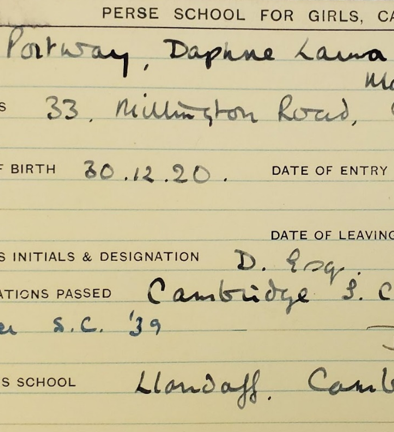
Daphne Portway
WWII military surveyor
Daphne Portway was one of only two women who held prominent roles during WWII surveying for the military. When World War Two broke out, Daphne Portway had yet to complete her education as a sixth form pupil at the Perse School For Girls. By D-Day, she had attained the rank of junior commander, working with Shirley Carpenter to ensure that the most up-to-date maps for the Normandy landing were available.