--col-off-white: #F7FDFC
--col-off-white
--col-headingtxt: #00312F
--col-headingtxt
--col-pri: #00B5AE
--col-pri
--col-sec: #80DAD7
--col-sec
--col-ter: #99E1DF
--col-ter
--col-tint--light: #99E1DF
--col-tint--light
--col-tint--normal: #80DAD7
--col-tint--normal
--col-tint--dark: #66D3CE
--col-tint--dark
--col-tint--darker: #4DCBC6
--col-tint--darker
--col-tint--darkest: #33C4BE
--col-tint--darkest
--col-shade--light: #00918B
--col-shade--light
--col-shade--normal: #007F7A
--col-shade--normal
--col-shade--dark: #006d68
--col-shade--dark
--col-shade--darker: #005b57
--col-shade--darker
--col-shade--darkest: #004846
--col-shade--darkest
Stephen Perse Cambridge
Our History
The Evolution of Excellence:
From The Perse School for Girls to Stephen Perse Cambridge
Our story is one of radical vision and a constant drive to redefine what education can be. Founded in an era when academic opportunities for women were scarce, it has evolved into a co-educational, world-class institution.
1881: A vision for equality

‘Your attendance is requested at a small preliminary meeting at Professor and Mrs Clark’s on Monday Dec 8th [1879] at 3 o’clock to consider the desirability of taking steps to establish a Public Day School for girls in Cambridge.’
This meeting marked the beginning of a sequence of events which culminated, on 17 January 1881, in the opening of the Perse School for Girls. 'Perse Girls' was one of the pioneering foundations for girls’ education, and has always been proud of its reputation as a centre of educational excellence for girls. Yet, in the early years of its history, the school admitted boys as well as girls into its Kindergarten – most notably a young John Maynard Keynes.
Under the leadership of its first headmistress, Miss Kate Street, the school quickly gained a reputation for academic excellence, proving that women could excel in the classics, sciences, and mathematics – subjects often denied to them at the time.
Pictured: Miss Street and staff in the 1890s.
1883: The move to Panton House
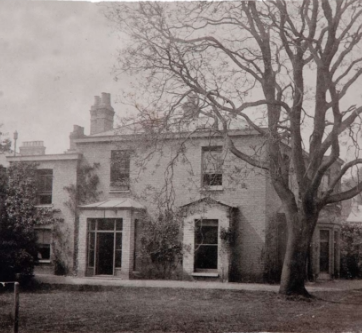
In November 1882, Miss Street noted that the original site at 68 Trumpington Street was "too small for any first-rate organisation", and shortly thereafter the school moved to Panton House, where the Senior School remains today. The property was initially rented on a 10-year lease, before being purchased for £5000.
From its earliest days, the school established a reputation for exceptional academic achievement. Within just three years of opening, pupils were excelling in prestigious national public examinations – earning top honours, subject prizes in Latin, and distinctions across mathematics, classics, modern languages, and English studies. Despite operating in its formative years with a small staff and modest resources, the school consistently produced outstanding results, with students regularly winning prestigious scholarships to Newnham College, Cambridge. This rapid rise in academic standing was so pronounced that in 1893 the school proudly renamed itself to 'The Perse High School for Girls' to assert its official rank as a leading High School. The school reverted to its original name, The Perse School for Girls, in 1930.
Pictured: Panton House in 1920.
1940s: Inspiration for St Trinians
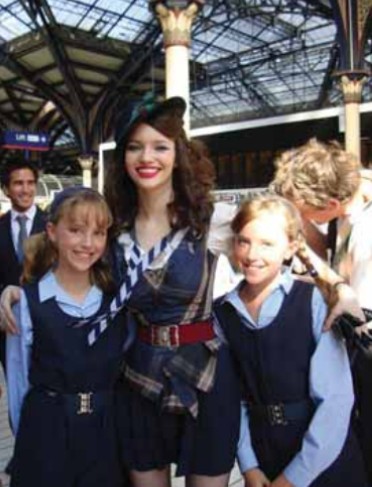
In the mid-twentieth century, artist Ronald Searle – inspired by his observations while living in Cambridge – modelled his St Trinian’s cartoons on the school. Our school received a letter from Mr Searle in 1993, confirming that we were the inspiration for his cartoons, and hoped that we wouldn't hold that against him!
The cartoon series later adapted into much-loved films where some of our students at the time appeared as extras in the 2007 remake!
Pictured: Our students on set for the 2007 St Trinian's film where they appeared as extras.
What it meant to be a 'Perse Girl'
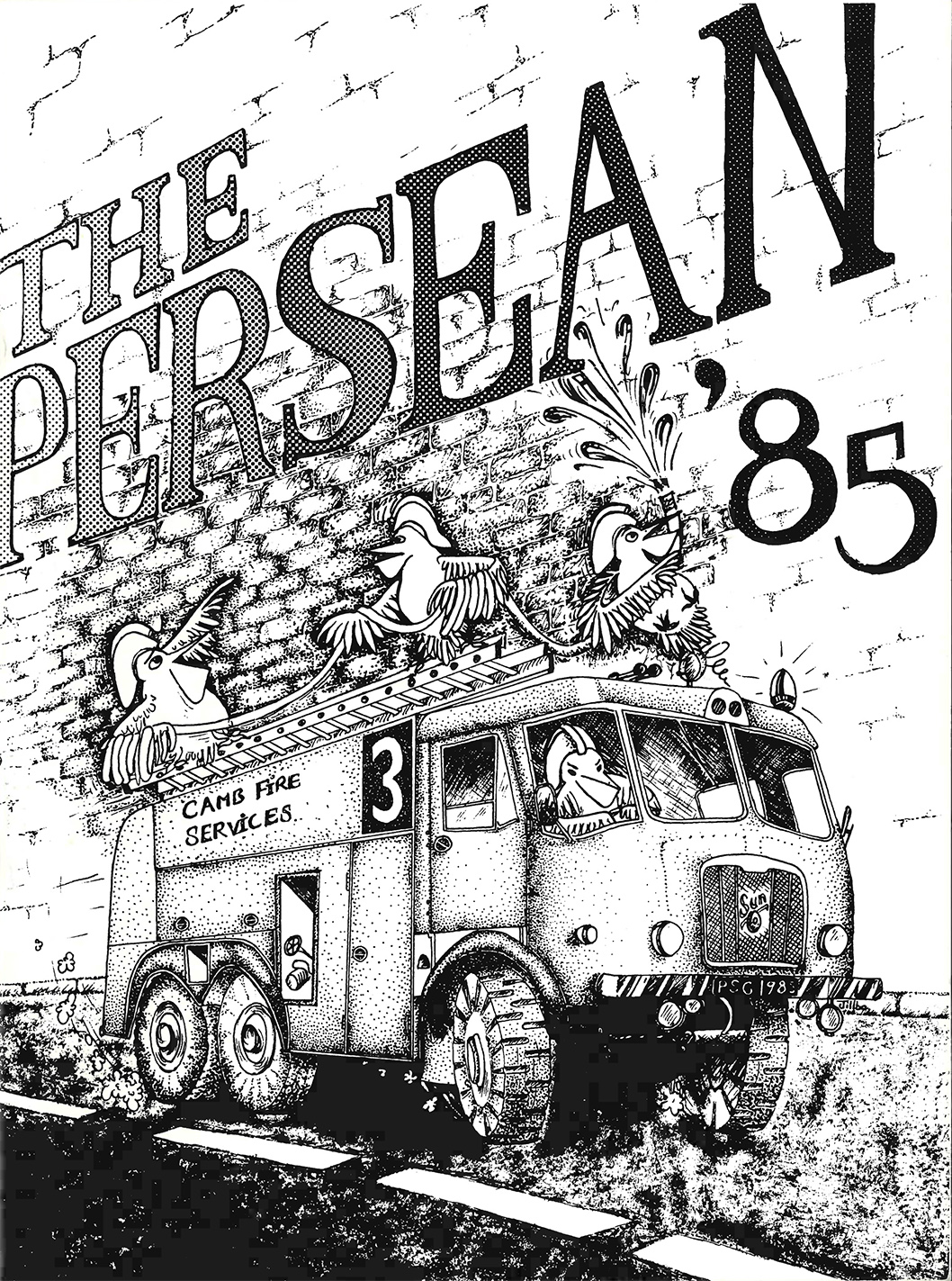
Many of our alumni identify themselves as 'Perse Girls', from our time as The Perse School for Girls.
To be a "Perse Girl" meant being part of a pioneering tradition of educational excellence characterised by a unique blend of intellectual ambition and a spirited, individualised personality. This was deeply rooted in a tradition of friendliness and a very special relationship between pupils and staff, where a shared excitement for ideas and educational discovery fostered both support and independence.
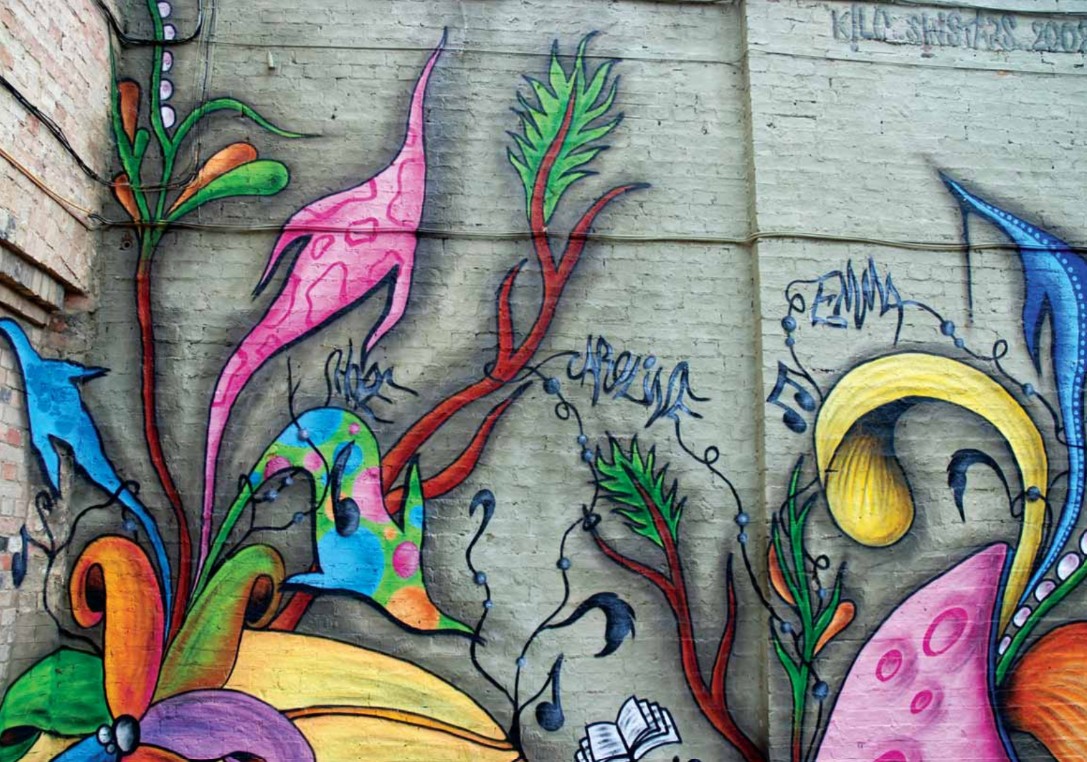
Furthermore, their identity was defined by an international-mindedness, and commitment to the "spirit of the age" (L’esprit de son âge), often expressed through a mastery of modern languages and global awareness. Creative and critical thinking were at the heart of endeavours, whether in the classroom, on the stage, or the sports field. Ultimately, being a Perse Girl involved being ambitious, versatile, and in constant pursuit of excellence.
Stephen Perse Cambridge is proud to continue the best of this tradition today: intellectual ambition, individualised personality, friendliness among peers, and strong relationships between students and teachers.
2008: Evolution into the Stephen Perse Foundation
In the late 20th century, the school began to expand its footprint, acquiring new sites and broadening its reach to include younger age groups. The most significant shift occurred in 2008. To reflect its growing family of schools and a more modern, holistic approach to education, the institution was renamed the Stephen Perse Foundation.
This transformation was more than just a name change; it marked a shift toward a globalised, forward-thinking curriculum. Key milestones included:
- Going co-educational: Recognising that the modern world requires collaboration across all genders, we began our transition into a fully co-educational environment.
- The 1-18 Journey: The Foundation created a seamless educational pathway from nursery through to Sixth Form.
Despite these significant changes, our recognition for excellence remained when, in 2013, the Sunday Times named us the IB School of the Year for the second time.
 "
"Innovators
Rooted in a progressive movement, being at the forefront of new ideas has been a hallmark of our school throughout its history and into the modern day.
In the early 2010s, we redefined our educational landscape as one of the first schools to adopt a 1:1 iPad programme – moving far beyond digitising textbooks to foster a culture of guided discovery. This forward-thinking infrastructure later enabled us to set the gold standard for remote learning.
We have a proven track record of continually adapting to best suit the evolving needs of our students.
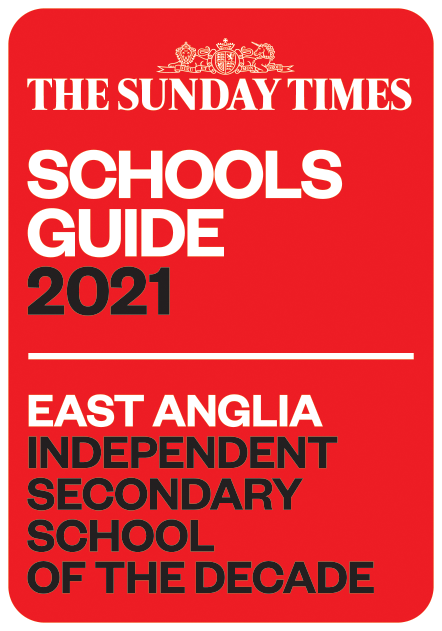
2021: The Sunday Times Independent School of the Decade
In 2021, we were honoured to be named The Sunday Times Independent School of the Decade for East Anglia. They acknowledged our leadership and vision in adopting digital technology so early, stating, "The brilliance of that initiative bore spectacular fruit in March [2020] when schools closed down practically overnight and learning shifted online", where our students benefited from our decision to "embrace digital learning and place the school at the cutting edge", just as they had from the "more general quest for both a rounded education, excellent pastoral care and consistently high standards."
Today: We are Stephen Perse Cambridge
Today, we are Stephen Perse Cambridge, a name that acknowledges our past, and the fact we are based in the pioneering academic city of Cambridge.
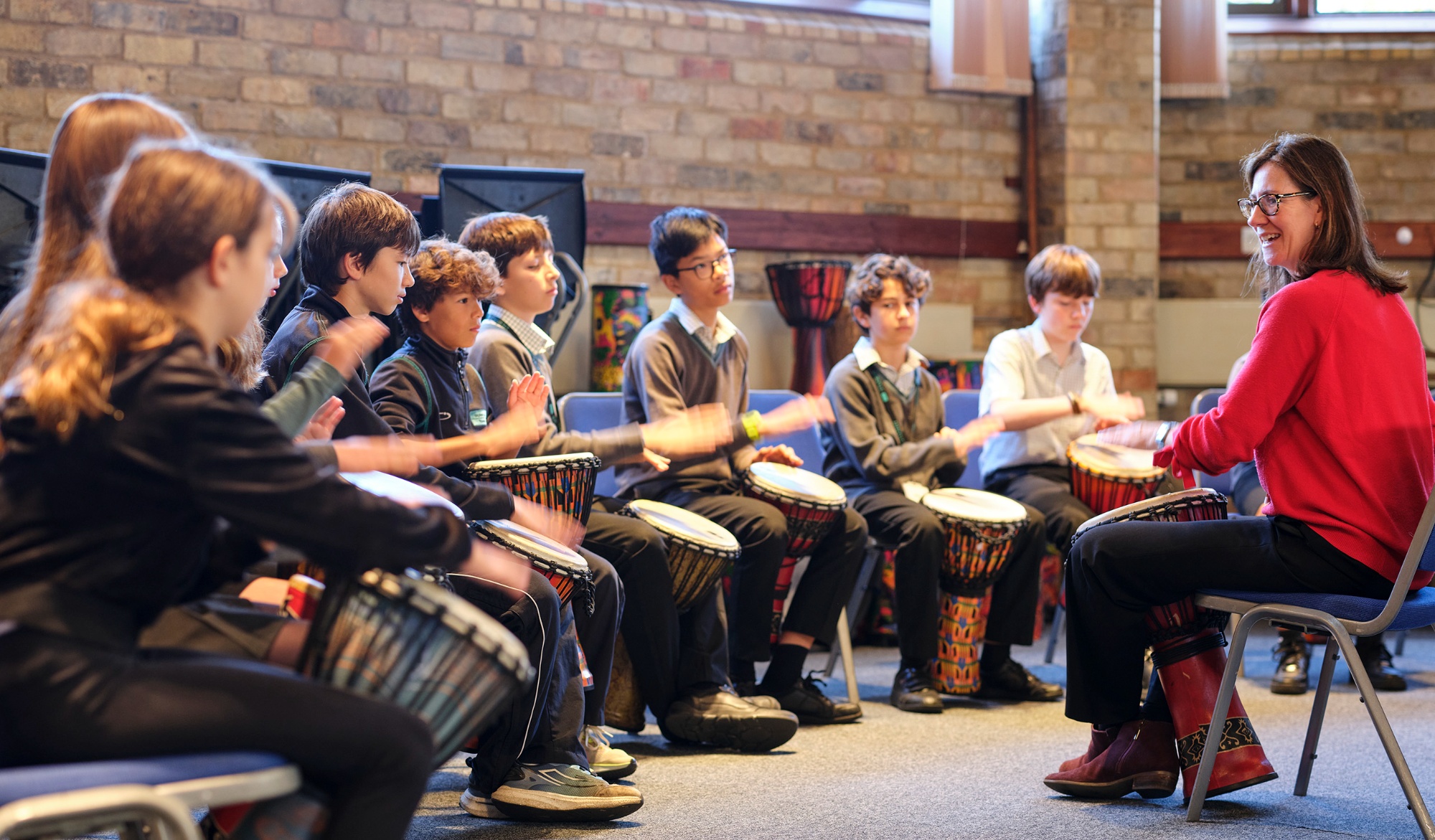
We have retained the best parts of our history, remaining rooted in our 1881 mission of academic rigour, and stand as a testament to the idea that tradition and innovation are not mutually exclusive.
While we are now co-educational, in keeping with our roots as a girls' school, we still champion girls' education and true equality. Our schools are vibrant, where kindness and respect are the norm. Our students are intellectually curious and ambitious, with a genuine love of learning which is shared and reflected in their relationships with their teachers.
Most importantly, we remain true to Dr Perse’s belief that education should be a right, not a privilege, through our extensive bursary programme, which continues to widen access and transform the lives of young people.
Our history has shaped us as an independent school for the modern world.